
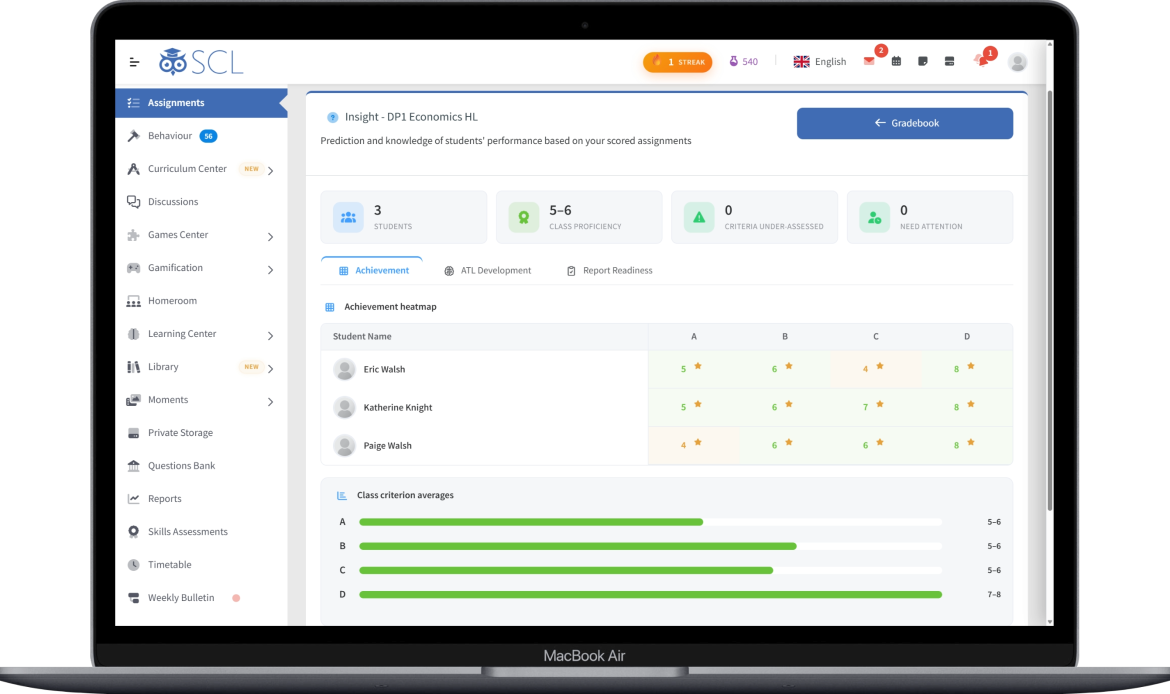
تخبرك معظم منصات إدارة المدارس بأنها تدعم IB. وأقل منها ما يستطيع أن يعرض عليك معياراً يجري تقديره، أو مهارة ATL مرتبطة بواجب، أو تقرير PYP يرسله المنسق إلى الأسرة فعلاً.
وتنشأ هذه الفجوة لأن متطلبات IB ليست ميزة تضاف من الخارج. فهي تغير شكل التقييم نفسه، والنظام المبني على النسب المئوية والمتوسط المرجّح يجد صعوبة في تمثيلها بأمانة. وهذا ما ينبغي اختباره، برنامجاً برنامجاً.
البكالوريا الدولية ثلاثة برامج، لا برنامج واحد
ويستحق هذا أن يقال صراحةً، لأن الموردين كثيراً ما يجيبون "نعم، ندعم IB" وهم يقصدون واحداً منها.
برنامج PYP قائم على الاستقصاء وسردي في معظمه. فالتقييم فيه أدلة تجمع بمرور الوقت مقابل نواتج التعلم، وتعتمد التقارير على تعليقات المعلم أكثر من اعتمادها على درجة من مئة. والنظام الذي يصر على أن ينتج كل تقييم رقماً سيصطدم بالبرنامج.
برنامج MYP هو الأكثر تطلباً من الناحية البنيوية. أربعة معايير لكل مادة دراسية، يقدر كل منها على مقياس مستويات خاص به من 0 إلى 8 مقابل واصفات منشورة، بحكم يقوم على المستوى الأنسب لا على المتوسط، ثم جدول حدود الدرجات الذي يحول مجاميع المعايير إلى درجة من 1 إلى 7. وتدرج مهارات Approaches to Learning في التقرير إلى جانب ذلك. وإن كانت المنصة ستنهار في موضع، فهنا تنهار.
برنامج الدبلوما أقرب إلى الممارسة التقليدية، من 1 إلى 7 لكل مادة دراسية، لكنه يضيف تتبع التقييم الداخلي والدرجات المتوقعة والمكون الأساسي: Theory of Knowledge وExtended Essay وCAS.
وكثير من المدارس تطبق برنامجين أو ثلاثة منها في وقت واحد. وإذا كانت مدرستك كذلك، فكل سؤال أدناه ينطبق عليها جميعاً في آن واحد.
1. التقييم بالمعايير يجب أن يكون حقيقياً، لا حلاً التفافياً
وأشيع المراوغات نظام يتيح لك إنشاء أربع فئات للواجبات تسميها A وB وC وD ثم ترجّحها. هذا ليس تقييماً بالمعايير، بل متوسط مرجّح يرتدي زياً تنكرياً.
والتقييم بالمعايير الحقيقي يعني أن يقدر المعلم العمل مقابل كل معيار على حدة، وفق مقياس المستويات الخاص بذلك المعيار، وأن يحتفظ النظام بهذه الدرجات باعتبارها حقائق مستقلة بدلاً من دمجها في رقم واحد.
ما ينبغي اختباره: اطلب أن ترى واجباً واحداً جرى تقديره مقابل أربعة معايير، ثم اسأل عن وضع الطالب الحالي في كل معيار. وإذا كان الجواب نسبة مئوية واحدة، فالنظام لا يفعل ذلك.
وتقدر SCL المعايير كلاً على حدة مع إظهار واصفات المستويات للمعلم أثناء التصحيح، وتحتفظ بسجل كل معيار منفصلاً.
2. المستوى الأنسب لا المتوسط الحسابي
وتنص IB صراحةً على أن مستوى المعيار حكم مهني بشأن أي الواصفات أنسب لمجموع الأدلة، لا متوسط كل ما أنجزه الطالب.
والنظام الذي يكتفي بحساب المتوسط يدفع المعلمين بهدوء إلى جداول البيانات وقت إعداد التقارير، وهو بالضبط ما اشتريت البرنامج لتتجنبه.
ما ينبغي اختباره: هل يستطيع المعلم أن يحدد مستوى معيار يختلف عما يشير إليه الحساب، مع بقاء الدرجات السابقة ظاهرة بوصفها أدلة؟ وهل يستطيع تسجيل السبب؟
وتدعم SCL تحديد المستوى الأنسب لكل معيار في الأعمال الختامية، إلى جانب الدرجات الفردية، وتتيح للمعلمين إرفاق تعليق بالحكم.
3. مهارات ATL يجب أن ترتبط بعمل حقيقي
وعند Approaches to Learning تتحول كثير من التطبيقات إلى مسرحية: قائمة منفصلة في مكان ما، تملأ مرة واحدة كل فصل دراسي من الذاكرة لأن شيئاً لم يربطها بالعمل الصفي الفعلي.
ما ينبغي اختباره: هل يمكن ربط مهارة ATL بالواجب الذي ينمّيها، بحيث يبني السجل نفسه بنفسه أثناء تدريس المعلمين؟ وهل يستطيع المنسق أن يرى أي مجموعات المهارات مغطاة على مستوى الصف الدراسي وأيها لا يجري التطرق إليه إطلاقاً؟
وفي SCL توسم مهارات ATL على الواجبات وخطط الوحدات، وتظهر إلى جانب الدرجات لا في مستند منفصل.
4. تخطيط الوحدات يجب أن يتصل بالتقييم
ومخطط الوحدات الذي ليس سوى معالج نصوص بمسمى فخم هو مكتبة مستندات، لا نظام تخطيط. وتظهر القيمة حين ترتبط الخطة بالعمل.
ما ينبغي اختباره: حين يكتب المعلم وحدة بمفهومها الرئيسي ومفاهيمها ذات الصلة وسياقها العالمي وبيان الاستقصاء الخاص بها، هل يمكن ربط الواجبات التي تقيّمها بها؟ وهل يستطيع المنسق بعد ذلك أن يرى التغطية على مدار العام والفجوات فيها دون فتح كل خطة؟
ويضم مركز المناهج في SCL خطط الوحدات والدروس مع مفاهيم IB الرئيسية وسمات ملف المتعلم، وأهداف المواد الدراسية ومعايير المناهج، ويعرض تقارير التغطية لكل مادة دراسية وصف.
5. التقارير يجب أن تبدو مثل تقارير IB
وهنا عادةً ينفد صبر المنسق. فتقرير PYP وتقرير MYP لا يشبهان شهادة الدرجات الأمريكية، ولا يمكن إنتاج أي منهما بإعادة تسمية الأعمدة.
ما ينبغي اختباره: اطلب أن ترى تقرير MYP مكتملاً، بمستويات المعايير والدرجة المحولة من 1 إلى 7 وتقارير ATL وتعليقات المعلمين، ناتجاً عن درجات أدخلها معلم. ثم اطلب المثل لتقرير PYP. ثم اسأل هل يمكن أن يوجد الاثنان في العام الدراسي نفسه لمراحل دراسية مختلفة.
وتوفّر SCL قوالب شهادات الدرجات لبرنامجي PYP وMYP إلى جانب الصيغ الأمريكية والبريطانية وIGCSE والصيغ الوطنية المصرية، ويمكن للمدرسة تشغيل عدة صيغ منها في وقت واحد عبر المراحل الدراسية.
6. لا يزال عليه أن يكون نظاماً مدرسياً
مدرسة IB مدرسة. فهي تقبل الطلاب وترصد الحضور والغياب وتحصّل الرسوم وتشغّل الحافلات وتجيب أولياء الأمور. والأداة المتخصصة في IB التي لا تفعل شيئاً من ذلك تتركك تشتري نظاماً ثانياً وتوفّق بين الاثنين.
ما ينبغي اختباره: هل أستطيع أن أرى مستويات معايير الطالب وحضوره وغيابه ورسومه المستحقة دون الانتقال بين الأنظمة؟ وهل لأولياء الأمور تسجيل دخول واحد لكل ذلك؟
هذه هي الحجة التي تدعم اعتماد منصة واحدة بدلاً من إضافة متخصصة. وتجمع SCL بين أدوات IB وبين سجل الطالب في النظام نفسه وعلى قاعدة بيانات واحدة، فمستوى المعيار الذي يسجله المعلم يظهر في سجل الطالب فوراً، وتراه الأسر في بوابة أولياء الأمور إلى جانب الحضور والغياب والرسوم.
7. اسأل عن المراجعة المعيارية وتوحيد التقدير
المعلمان اللذان يصححان المعيار نفسه ينبغي أن يصححاه بالطريقة نفسها. وتعالج المدارس ذلك باجتماعات توحيد التقدير، وينبغي للبرنامج أن يدعم هذا النقاش لا أن يعرقله.
ما ينبغي اختباره: هل يستطيع المنسق أن يرى كيف تتوزع مستويات المعايير بين المعلمين في المادة الدراسية نفسها والصف نفسه؟ هذا العرض الواحد هو ما يجعل اجتماع توحيد التقدير مثمراً.
الخلاصة
خذ هذه البنود معك إلى العرض التوضيحي واطلب أن يعرض كل بند منها لا أن يوصف:
- واجب واحد جرى تقديره مقابل أربعة معايير MYP، كل منها على مقياس مستوياته الخاص.
- مستوى أنسب محدد بناء على الأدلة، يختلف عن المتوسط.
- مهارة ATL مرتبطة بواجب حقيقي، وعرض للتغطية على مستوى الصف الدراسي.
- خطة وحدة بمفهوم رئيسي وبيان استقصاء، مرتبطة بالعمل الذي يقيّمها.
- تقرير MYP مكتمل وتقرير PYP مكتمل، ناتجان عن درجات المعلمين.
- مرحلتان دراسيتان على برنامجين مختلفين في العام الدراسي نفسه.
- مستويات المعايير والحضور والغياب والرسوم لطالب واحد، في مكان واحد.
- توزّع المعايير بين المعلمين في المادة الدراسية نفسها.
أي منصة تستطيع أن تقول إنها تدعم IB. وهذه البنود الثمانية هي التي تفصل التطبيق الحقيقي عن مجرد تمرين في المطابقة.
إذا أردت اختبار هذه القائمة على نظام حقيقي قيد التشغيل، احجز عرضاً توضيحياً وسنستعرضها معك بالترتيب، بما في ذلك النقاط التي لا نجيدها.